
Birth and Family Background:
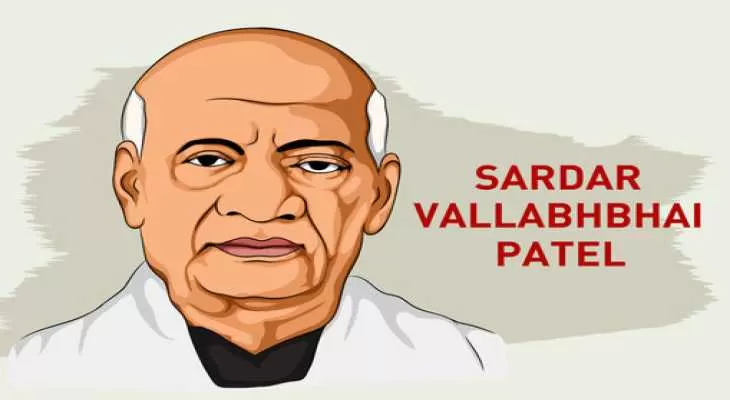
Born on 31st October 1875 in the small town of Nadiad in Gujarat Sardar Patel belonged to a modest Patel (farmer) family His father Jhaverbhai Patel was a farmer and his mother Ladba was a deeply religious woman who influenced his values of simplicity, honesty and hard work.
He was the third child in the family Though his family was not wealthy his parents valued education .
Education:
Patel went to the village school and then pursued his education in Nadiad. Initially he struggled with studies but his determination finally led him to excel academically.
He moved to Ahmedabad for further studies and completed his high school there. Later Patel joined the University of Bombay (now Mumbai) for his law degree and became a barrister after completing his studies in England
Despite having limited resources Patel managed to complete his education through hard work and persistence.
After returning from England, Patel started his law practice in Ahmedabad, earning a character for his hard work and remembrance. He became successful and was known for his sharp legal mind
Patel’s political career began when he got involved with Mahatma Gandhi’s non-violent movements. He met Gandhi during the Champaran Satyagraha (1917), where Gandhi was leading a campaign for the rights of indigo farmers in Bihar. Patel joined Gandhi’s attempt and soon became one of his closest associates.
Patel’s leadership skills and administrative abilities stood out during the Kheda Satyagraha (1918) where farmers in Gujarat were fighting for the remission of taxes due to crop failure. Patel's approach to the issue was politic and successful gaining him wide remembrance
Read Also This: Dr. Homi Jehangir Bhabha – Biography, Early Life, Career, Contributions & Awards
In 1920 when Mahatma Gandhi launched the Non-Cooperation Movement against British colonial rule, Sardar Patel took a leading role in Gujarat. He worked alongside Gandhi to lead protests, boycotts and strikes against British authorities.
Patel was a strong supporter of the Salt March (1930) led by Gandhi which aimed at breaking the British monopoly on salt production in India He led various protests in Gujarat during this time and was arrested multiple times.
In 1942, during the Quit India Movement Patel was again at the forefront demanding complete independence from British rule He was arrested by the British authorities but even in prison he remained steadfast in his support for India’s freedom.
After India gained independence in 1947 there was an important challenge in integrating over 560 princely states that were not directly parts of India but were independent under British rule These states had to decide whether to join India or Pakistan.
The partitions of India into two nations India and Pakistan, had left the country divided, and many princely states were hesitant about joining either of the new nations. Some of these states, like Hyderabad, Jammu and Kashmir, and Junagadh, were especially problematic.
As the first Deputy Prime Minister and Home Minister, Patel took on the responsibility of persuading the princely states to accede to India. He used his diplomatic skills backed by the threat of military intervention if compulsory to convince the rulers of most states to merge with India.
Hyderabad, for instance, had a Muslim ruler but a majority Hindu population, and it was reluctant to join India. Patel sent in military forces in a move called Operation Polo, which led to the peaceful integration of the state.
Similarly, Jammu and Kashmir, which had a Muslim majority and initially chose to remain independent, was integrated into India after Pakistan launched an invasion. The then Maharaja signed the Instrument of elevation to India in 1947.
Patel’s efforts ensured the unification of India into a single country despite the complexities posed by different religions, cultures and regions. His leadership and common sense in handling these delicate matters were key to India’s safety after independence.
Read Also This: Rani Lakshmi Bai Biography – Birth, Life, Education, Family & Death History
Sardar Patel was known for his pragmatic approach to leadership. He was not as charismatic as Gandhi, but he was highly efficient, disciplined, and decisive.
He was also a master of operation and master mind . While Gandhi inspired the masses Patel worked behind the scenes carefully planning and executing campaigns. His strong and set nature earned him the title of "Iron Man of India "
Patel’s role as the Home Minister in the opening years of independence was crucial in shaping India’s political structure. He placed the foundation for a strong unified India by focusing on law and order governance and economic stability.
He also played a significant role in the drafting of India’s Constitution and in setting up various directorial and political institutions of the country
To honor Sardar Patel’s role in uniting India, the Statue of Unity was erected in Kevadia, Gujarat, and unveiled on 31st October 2018. Standing at 182 meters, it is the tallest statue in the world and represents Patel’s efforts in integrating India.
The Government of India observes National Unity Day on 31st October every year, the birthday of Sardar Patel, to celebrate his offering and emphasize the importance of national unity and integrity.
Despite his immense influence and status, Sardar Patel led a simple life. He believed in frugality and lived in a modest manner. His integrity and sense of duty were central to his character.
Patel was known for his firm resolve. He believed in action and was not swayed by emotional or political pressures. His decisions were often seen as decisive, even when they were difficult or controversial.
While Patel was known for his strong personality, he was always loyal to Mahatma Gandhi and supported him throughout their years of working together However there were moments when their views differed, especially during the Chauri Chaura incident (1922) when Patel believed in continuing the movements but Gandhi called it off. Despite their remainder. Patel remained Gandhi’s close confidant.
Sardar Vallabhbhai Patel’s contributions to India cannot be overstated. From playing a central role in the freedom struggle to being the architect of India’s integration his leadership and vision shaped the future of the nation. His faithful commitment to unity and his tireless work ethic remain a creativity to millions. The benefaction of Sardar Patel continues to resonate in India today as his work helped create a strong united and independent nation.
????️ Ever wondered who stitched India together when it was on the verge of falling apart? ????????
— Namami Bharatam ???? (@Namami_Bharatam) June 15, 2025
The story of how Sardar Vallabhbhai Patel united 562 princely states isn’t just history - it’s a masterclass in leadership, courage, and strategy. Read till the end to truly understand why… pic.twitter.com/7eLSiygfnO

Lata Mangeshkar Biography – Life, Career, Songs, Awards & Legacy
 Jul 30, 2025 03:07
Lata Mangeshkar Biography – Life, Career, Songs, Awards & Legacy
Jul 30, 2025 03:07
Lata Mangeshkar Biography – Life, Career, Songs, Awards & Legacy
Jul 30, 2025 03:07