
Rani Lakshmi Bai also known as the Rani of Jhansi remains one of India’s most revered freedom fighters and symbols of resistance against British colonist rule. Her courage, determination and leadership during the Indian Rebellion of 1857 earned her a lasting place in Indian history and legend. A symbol of valor and patriotism, Rani Lakshmi Bai life continues to inspire generations.
Rani Lakshmi Bai was born on 19th November 1828 in Varanasi (then known as Kashi) into a Marathi Brahmin family Her birth name was Manikarnika Tambe, and she was fondly called Manu by her close ones Her father, Moropant Tambe worked as an advisor in the court of the Peshwa of Bithoor, while her mother Bhagirathi Sapre was a cultured and religious woman.
Manikarnika’s childhood was unique for a girl in 19th-century India. After her mother passed away when she was just four years old, her father took her to Bithoor, where she grew up in the court of Peshwa Baji Rao II. The Peshwa treated her like his own daughter and encouraged her education and training in martial arts.
Unlike many girls of her time, Manikarnika received both traditional education and physical training. She was taught to read and write in Sanskrit and Marathi and was well-versed in scriptures and philosophy. However, what truly set her apart was her training in horse riding, sword fighting, archery, and shooting.
Manikarnika grew up playing with boys and had a fiery spirit. She was trained by some of the best warriors of the Peshwa's court. Her favorite horse was named Badal, and she practiced swordsmanship and military tactics from a young age. Her education and training laid the foundation for the fearless warrior queen she would become.
At the age of 14, Manikarnika was married to Maharaja Gangadhar Rao Newalkar the king of Jhansi, a princely state in northern India. After her marriage she was given the name Lakshmi Bai in honor of the Hindu goddess Lakshmi.
As the queen of Jhansi, Lakshmi Bai adapted to her new role with grace and intelligence. She took interest in state affairs and gained the respect of the royal court and citizens alike. Her marriage to Gangadhar Rao was marked by tragedy when their minor son died at just four months of age.
To secure the line of succession, the couple adopted a boy named Damodar Rao in 1853. However soon after the adoption Maharaja Gangadhar Rao passed away. This marked the dawn of Lakshmi Bai’s battle not only for her kingdom but also against British imperialism.
Following the king’s death, the British East India Company under Governor General Lord Dalhousie, refused to recognize Damodar Rao as the rightful heir. They applied the Doctrine of Lapse which allowed the British to annex any princely state without a natural-born male heir.
Rani Lakshmi Bai protested the seizure. She argued that her adopted son had every right to succeed the throne. Her appeals were rejected and in 1854 Jhansi was annexed by the British. Lakshmi Bai was asked to vacate the palace and was given a pension.
However she was not willing to accept this injustice quietly. She declared “Meri Jhansi nahi doongi” (I shall not give up my Jhansi). These defiant statements became a rallying cry during the First War of Indian Independence in 1857.
The year 1857 saw a massive uprising against British rule across northern and central India. When the revolt reached Jhansi Lakshmi Bai emerged as a key leader. She quickly organized an army of rebels including both men and women and trained them to fight against the British forces.
Her administration during the rebellion was marked by strong leadership strategy, and justice. She took control of the Jhansi fort and ruled in the name of her son, Damodar Rao.
In March 1858, British forces led by Generals Hugh Rose laid siege to Jhansi Rani Lakshmi Bai’s army fought fiercely for two weeks Despite being vastly outnumbered, they held the fort with unmatched courage Ultimately the British breached the walls, leading to intense hand-to-hand combat.
Rather than surrender Lakshmi Bai escaped from Jhansi on horseback with her son tied to her back. She regrouped with Tatya Tope, another prominent leader of the rebellion and together they captured the fort of Gwalior from British control.
Her presence in Gwalior was brief but heroic. She continued to inspire soldiers and civilians alike with her unbreakable spirit and leadership. The British, determined to crush the rebellion, launched a final attack on Gwalior.
On 18th June 1858 during the fierce battles near Gwalior Rani Lakshmi Bai was martyred. Accounts suggest that she fought valiantly dressed as a male soldier and killed many British soldiers before being fatally wounded. According to some sources she asked her loyal attendants to burn her body so that the British could not capture it.
Her death marked a turning point in the rebellion. Though the British regained control, the legend of Lakshmi Bai lived on. Even her enemies admired her bravery. General Hugh Rose described her as “the most dangerous of all Indian leaders.”
Rani Lakshmi Bai's adopted son, Damodar Rao, was not recognized by the British as the heir to Jhansi and was given a meager pension. He lived a humble life after the end of the rebellion.
Lakshmi Bai had no surviving biological children.However, she is remembered as a mother figure and freedom fighter who laid down her life for the people of India. Numerous songs, poems, and stories have been written about her bravery.
One of the most famous lines about her comes from poet Subhadra Kumari Chauhan:
“Khoob ladi mardani woh toh Jhansi wali Rani thi.”
(She fought valiantly like a man; she was the queen of Jhansi.)
Her legacy is commemorated in Indian culture, education literature and politics. Statues of Rani Lakshmi Bai stand tall in many cities, and her story is taught in history text books across the country.
Rani Lakshmi Bai was more than a queen; she was a symbol of resistance, strength and patriotism At a time when women were confined to domestic roles she broke barriers by leading legions and challenging one of the most powerful empires in the world. Her resolve
Her life was short, just 29 years but the impact she made resonates to this day. Rani Lakshmi Bai story is not just a chapter in Indian history it is a beacon of inspiration for all those who value freedom, equality and courage.
In an era dominated by colonial power her defiance and heroism stood as a reminder that the spirits of a free India could not be stifled. The Queen of Jhansi remains an eternal symbol of Indian resistance and pride.
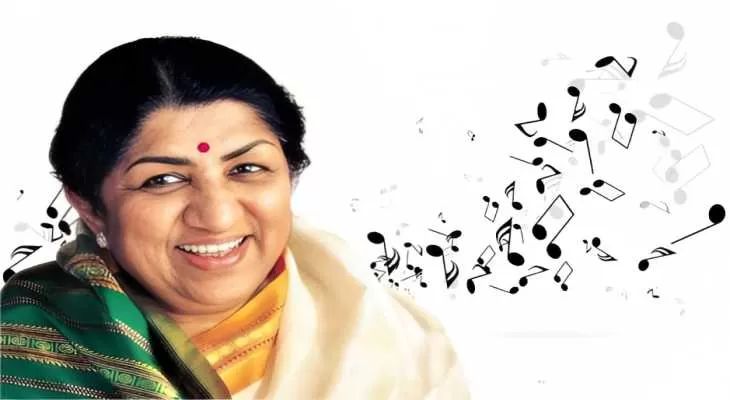
Lata Mangeshkar Biography – Life, Career, Songs, Awards & Legacy
 Jul 30, 2025 03:07
Lata Mangeshkar Biography – Life, Career, Songs, Awards & Legacy
Jul 30, 2025 03:07
Lata Mangeshkar Biography – Life, Career, Songs, Awards & Legacy
Jul 30, 2025 03:07