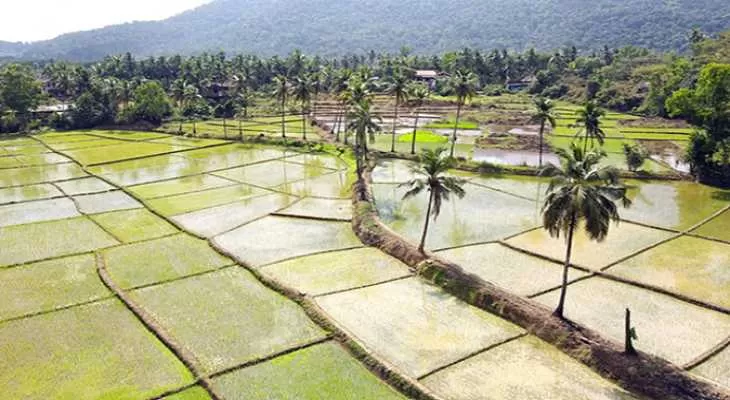

Indian farmers are expected to benefit the most from the India-UK FTA. India's agricultural exports to the United Kingdom are expected to grow by more than 20 percent in the next three years. After the implementation of this agreement, more than 95 percent of India's agricultural and processed food tariff lines will be duty-free.
.jpg)
Indian farmers are likely to be the biggest beneficiaries of the India-UK Trade Agreement (FTA). Once the agreement is formalised, the FTA is expected to open up premium markets in the UK for Indian products. It is also expected to provide benefits similar to or better than those enjoyed by exporters from European countries such as Germany and the Netherlands.
Along with Indian food items like turmeric, pepper and cardamom, processed products like mango pulp, pickles and pulses will get the benefit of duty free. This will improve their margins and market access. India's agricultural exports to the United Kingdom are expected to grow by more than 20 percent in the next three years. This growth will be driven by duty free access to a wide range of Indian agricultural and processed food products. After the implementation of this agreement, more than 95 percent of India's agricultural and processed food tariff lines will not attract any duty.
These include fruits, vegetables, cereals, spice mixes, fruit pulp, ready-to-eat food, and more. The move will reduce the landed cost of these commodities in the UK. It will also increase their competitiveness in both mainstream and ethnic retail chains. The FTA also opens up opportunities for new and emerging products like jackfruit, millets, vegetables and organic herbs. This will encourage farmers to diversify and better manage domestic price fluctuations. FTAs will help the Indian agriculture sector focus on high-volume to high-value products and expand globally from catering to local markets.
Also, India has taken steps to protect its most sensitive agricultural sectors through free trade agreements. No tariff concessions will be given on dairy products, apples, oats and edible oils. This will ensure that domestic farmers in these sectors are not affected.
The agreement will also provide a major boost to India's fisheries sector, especially in coastal states like Andhra Pradesh, Odisha, Kerala and Tamil Nadu, by offering zero-duty access for 99 per cent of exports such as shrimp, tuna, fish meal and feed, which currently attract duties between 4.2 and 8.5 per cent.
The FTA is expected to boost India's seafood exports. The UK seafood import market, valued at $5.4 billion, offers a huge opportunity for India's blue economy.
In addition, the FTA lays the foundation for expanding India's high-margin branded exports in products such as coffee, tea, spices and other beverages. Currently, the UK contributes 1.7 per cent to India's coffee exports, 5.6 per cent to tea exports and 2.9 per cent to spices. With the end of tariffs, these sectors are expected to grow significantly. In particular, Indian instant coffee will be better positioned to compete with European exporters such as Germany and Spain in the fast-growing premium sector.
According to the government, the Indo-British free trade agreement will prove to be a game-changer for the country's agriculture and food processing sectors. The boost to exports will also give a boost to India's larger target of reaching US$100 billion in agricultural exports by 2030.
.jpg)

Lata Mangeshkar Biography – Life, Career, Songs, Awards & Legacy
 Jul 30, 2025 03:07
Lata Mangeshkar Biography – Life, Career, Songs, Awards & Legacy
Jul 30, 2025 03:07
Lata Mangeshkar Biography – Life, Career, Songs, Awards & Legacy
Jul 30, 2025 03:07