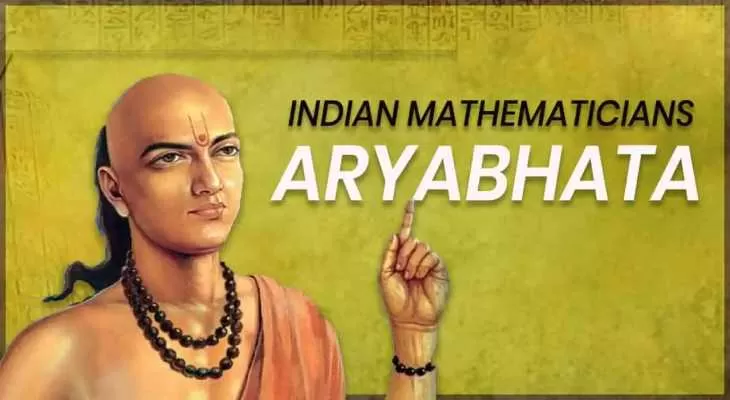

Aryabhatta was born in 476 CE, most likely in Kusumapura (modern-day Patna, Bihar, India). Some sources also suggest Kerala as his birthplace, but the majority associate him with the Magadha region. Very little is known about his family background. In spite of the limited biographical information it's evident that Aryabhatta exhibited exceptional mathematical and astronomical talents from an early age.
Aryabhatta pursued his studies in Kusumapura, which was a renowned centre of learning at the time and possibly home to Nalanda University. He became an eminent scholar and likely held a prominent teaching position He studied and later taught astronomy and mathematics, disciplines in which he made significant contributions. His work reflects a deep understanding of Indian and Greek mathematical systems.
The most notable literary work of Aryabhatta is the Aryabhatiya, completed in 499 CE when he was 23 years old. The Aryabhatiya is divided into four sections:
Gitika Pada – Large units of time.
Ganitapada – Mathematics, covering arithmetic, algebra, and geometry.
Kalakriyapada – Calendrics and astronomical calculations.
Golapada – Spherical astronomy.
Another work attributed to him is the Arya-siddhanta, although this work is now lost and known only through references in later texts.
Aryabhatta made groundbreaking contributions to Indian mathematics:
Place Value System and Zero Although : he did not use a symbol for zero, his work used place value notation, laying groundwork for modern number systems.
Approximation of π (Pi) : Aryabhatta approximated π as 3.1416 and stated it was an irrational number.
Trigonometry: He defined sine (jya) cosine (kojya) and versine (utkrama-jya) providing a table of sine values.
Algebra : Solved linear and quadratic equations and introduced methods for solving indeterminate equations.
Area and Volume : provides formulas for the areas of triangles and circles and the volume of spheres.
Aryabhatta revolutionized Indian astronomy with several important insights:
Heliocentric Ideas: Proposed that the Earth rotates on its axis daily, which explained the apparent westward motion of stars.
Solar and Lunar Eclipses: Accurately explained eclipses as shadows of the Earth and Moon, rejecting the mythological Rahu Ketu concept.
Sidereal Periods: Calculated the sidereal rotation of Earth and the length of a year hereby remarkable accuracy
Planetary Positions: Developed methods to resolve the positions of planets using trigonometric calculations.
Aryabhatta’s work influenced not only Indian scholars but also the Islamic Golden Age and European Renaissance thinkers:
Inspired mathematicians like Bhaskara I and Brahmagupta.
His work was translated into Arabic as Arajbahara, influencing Persian and Arab scientists.
India honored him by naming the first Indian satellite Aryabhata (launched in 1975).
He is considered the father of Indian mathematics and astronomy.
To study Aryabhatta and his contributions in more depth, the following books are recommended:
"Aryabhata: Life and Contributions" by K.S. Shukla
"The Aryabhatiya of Aryabhata" (English translation with commentary) by Walter Eugene Clark
"Mathematics in India" by Kim Plofker
"The History of Mathematics" by David M. Burton (Chapter on Indian Mathematics)
"India's Ancient Past" by R.S. Sharma
"The comb of the Peacock:Non European Roots of Mathematics" by George Gheverghese Joseph
Aryabhatta was born in 476 CE, though the exact location remains a matter of scholarly debate. The two most proposed birthplaces are:
Kusumapura (Pataliputra): Most widely accepted, corresponding to modern-day Patna, Bihar, a prominent center of learning.
Kerala: Some suggest Aryabhatta was born in Kerala and later migrated to Kusumapura for education.
Despite the lack of concrete biographical details, it is evident that Aryabhatta was a prodigious learner. His early life likely coincided with the flourishing of Indian intellectual culture, with thriving centers of learning such as Nalanda University, where he may have studied or taught.
Academic Hub: Aryabhatta pursued his education in Kusumapura, a hub of astronomy and mathematics in ancient India.
Affiliation with Nalanda: Though not explicitly documented, Aryabhatta's association with Nalanda University is highly probable, as it was the most advanced institution of learning in India during that period.
Teacher and Scholar: His early achievements suggest he might have been a professor of mathematics and astronomy, possibly at Nalanda or a similar institution.
Aryabhatta’s academic career culminated in the authorship of Aryabhatiya at the age of 23, where he showcased exceptional mathematical and astronomical insights.
Aryabhatiya is Aryabhatta’s magnum opus, written in Sanskrit and comprising 121 verses, divided into four chapters:
Gitikapada (13 shlokas): Describes cosmological time cycles, including Yugas, Kalpas, and planetary revolutions.
Ganitapada (33 shlokas): Covers arithmetic, geometry, algebra, and trigonometry.
Kalakriyapada (25 shlokas): Discuss calendars, planetary periods, and units of time.
Golapada (50 shlokas): Focuses on spherical astronomy, celestial sphere, and eclipse calculations.
Notable for its concise style, Aryabhatiya uses metrical Sanskrit verses, meant to aid memorization and oral transmission.
This is a lost work, known only through references by later astronomers like Varahamihira and Brahmagupta.
It likely contained detailed astronomical tables and further developments in trigonometry and planetary motion.
Aryabhatta laid the groundwork for classical Indian mathematics and made several revolutionary advances:
Used a place-value system and a set of letters to represent numbers, similar in principle to positional notation.
Though he didn’t use the symbol for zero, his understanding of its importance is evident.
Calculated π as 3.1416, remarkably close to the modern value.
He noted:“Add 4 to 100, multiply by 8, then add 62,000. The result is approximately the circumference of a circle of diameter 20,000.”
Which yields:
π ≈ 62832 / 20000 = 3.1416
Solved linear and quadratic equations.
Devised algorithms for solving indeterminate equations of the form ax – by = c, known today as Diophantine equations.
Calculated the area of triangles and circles.
Provided rules for calculating the volume of spheres and other solids.
Introduced sine (jya) and cosine (kojya) tables.
Developed interpolation methods for constructing trigonometric tables at intervals of 3.75°.
Aryabhatta’s work in astronomy marks a scientific revolution in Indian cosmology:
Proposed that the Earth rotates on its axis, explaining the apparent westward movement of stars.
This was centuries ahead of Copernicus and Galileo in the West.
Gave scientific explanations for solar and lunar eclipses:
Lunar eclipse occurs when Earth’s shadow falls on the Moon.
Solar eclipse occurs when the Moon obstructs sunlight to Earth.
Rejected mythological beliefs (Rahu and Ketu), favoring shadow-based scientific reasoning.
Calculated the sidereal year as 365 days, 6 hours, 12 minutes, and 30 seconds – very close to the modern value.
Introduced accurate planetary models for predicting conjunctions and positions of celestial bodies.
Calculated the mean diameters of planets and their distances from Earth.
Used epicyclic models to explain retrograde motion of planets.
Aryabhatta’s influence shaped not only Indian science but had global impact:
Inspired generations of Indian astronomers: Bhaskara I, Varahamihira, Brahmagupta.
India's first satellite was named "Aryabhata" in his honor, launched in 1975.
Statues and institutes bear his name, such as:
Aryabhatta Research Institute of Observational Sciences (ARIES)
Aryabhatta Knowledge University, Bihar
His works were translated into Arabic in the 8th century.
Known as Arjabhar, his methods influenced Al-Khwarizmi, Al-Biruni, and others during the Islamic Golden Age.
Though his heliocentric ideas remained obscure, his methods laid groundwork that eventually influenced Renaissance thinkers.
If you wish to explore Aryabhatta’s life and work in more depth, here are authoritative sources:
The Aryabhatiya of Aryabhata– Translation and commentary by Walter Eugene Clark
(Harvard Oriental Series)
Mathematics in India– By Kim Plofker
(Princeton University Press)
The History of Mathematics– By David M. Burton
(Chapter on Indian mathematics)
The Crest of the Peacock Non-European Roots of Mathematics– By George Gheverghese Joseph
India’s Ancient Past– By R.S. Sharma
(A general history including scientific developments)
Astronomy in India A Perspective– By S.N. Sen
Great Mathematicians Aryabhata– By B.S. Yadav and Man Mohan
(For high-school and undergraduate level reading)
Aryabhatta was one of the earliest and most renowned mathematicians and astronomers of ancient India. He was born in 476 CE. Although the exact location of his birth is uncertain, most historians agree that it was likely in Kusumapura, near present-day Patna in Bihar. Some sources also associate him with the region of Kerala, but his academic work is strongly linked with Kusumapura, a major center of learning in ancient India.
Very little is known about his family background or personal life. However, it is clear from his work that he was an exceptional scholar from an early age, possessing deep knowledge in both mathematics and astronomy.
Aryabhatta is believed to have studied in Kusumapura, where he might have been associated with Nalanda University, one of the oldest and most prestigious centers of learning in ancient India. His education included various branches of mathematics, astronomy, and possibly other subjects of the classical Indian curriculum.
Aryabhatta was not only a student but also an influential teacher. By the age of 23, he had composed his most famous work, the Aryabhatiya. His position as a leading scholar in Kusumapura indicates that he may have held a significant academic role, possibly directing an astronomical observatory or leading a school of thought.
Aryabhatta's best-known work is the Aryabhatiya, composed in 499 CE. It is a concise but comprehensive treatise written in Sanskrit verses, consisting of 121 shlokas (verses) divided into four main chapters:
Gitikapada: Covers large units of time and the measurement of planetary periods.
Ganitapada: Focuses on mathematics, including arithmetic, geometry, algebra, and trigonometry.
Kalakriyapada: Discusses calendars, timekeeping methods, and astronomical cycles.
Golapada: Deals with the celestial sphere, planetary motion, and eclipses.
The Aryabhatiya was highly influential and widely studied by later Indian astronomers and mathematicians.
Another work attributed to Aryabhatta is the Arya-siddhanta, which is now lost. However, its content is partially known through references by later scholars like Varahamihira and Brahmagupta. This text likely contained detailed astronomical tables and more refined planetary models.
Aryabhatta made several pioneering contributions to the field of mathematics:
Place Value System: He used a place-value notation in a coded form, laying the foundation for the decimal system, though the symbol for zero was not explicitly used in his texts.
Approximation of Pi (π): He provided an approximate value of π as 3.1416 and mentioned that it is irrational.
Algebra: He solved linear and quadratic equations and introduced methods to solve indeterminate equations.
Geometry: Aryabhatta developed formulas to calculate the area of triangles and the circumference and area of circles. He also described the volume of spheres.
Trigonometry: He introduced trigonometric functions such as sine (jya), cosine (kojya), and versine (utkrama-jya), along with a table of sine values at regular intervals.
Aryabhatta's work in astronomy was equally ground breaking:
Earth’s Rotation: He proposed that the Earth rotates on its axis daily explaining the apparent movement of the stars in the sky This idea was centuries ahead of its time.
Eclipses:He gave scientific explanations for solar and lunar eclipses stating that they are caused by the shadows of the Earth and Moon He rejected the prevailing mythological explanations involving Rahu and Ketu.
Sidereal Year: Aryabhatta calculated the length of the sidereal year as 365 days 6 hours12 minutes and 30 seconds which is very close to the modern value.
Planetary Motion: He developed mathematical techniques to calculate the position of planets and explained the apparent retrograde motions of planets using epicycles.
Aryabhatta’s work had a lasting impact on science and mathematics in India and beyond:
His writings influenced many later Indian scholars, such as Bhaskara I, Brahmagupta, and Varahamihira.
His ideas were translated into Arabic during the Islamic Golden Age, where he became known as Arjabhar, influencing astronomers in the Middle East.
In modern times, his legacy has been honored in several ways:
India’s first satellite, launched in 1975, was named Aryabhata in his memory.
Institutions such as Aryabhatta Research Institute of Observational Sciences (ARIES) and Aryabhatta Knowledge University in Bihar are named after him.
Aryabhatta is often regarded as the father of Indian mathematics and astronomy for his unparalleled contributions.
For further reading and research the following books provide valuable insights into Aryabhatta’s life and work:
“The Aryabhatiya of Aryabhata” – Translated and edited by Walter Eugene Clark
“Mathematics in India” – By Kim Plofker
“The Crest of the Peacock: Non-European Roots of Mathematics” – By George Gheverghese Joseph
“The History of Mathematics” – By David M. Burton
“India's Ancient Past” – By R.S. Sharma
“Great Mathematicians: Aryabhata” – By B.S. Yadav and Man Mohan
“Astronomy in India: A Perspective” – By S.N. Sen
????1188 years before Newton, Aryabhatta worked on Arithmetic Trignometry, Algebra & Calculus etc
— RapperPandit (@RapperPandit) July 8, 2025
Let’s dive into Some Lesser known Facts about the Greatness of Bharat:-
1. Bharats steel, developed atleast 5,000 years ago, influenced the creation of Swords (Wootz Steel) in the… pic.twitter.com/lBhx1k6Wdm

Lata Mangeshkar Biography – Life, Career, Songs, Awards & Legacy
 Jul 30, 2025 03:07
Lata Mangeshkar Biography – Life, Career, Songs, Awards & Legacy
Jul 30, 2025 03:07
Lata Mangeshkar Biography – Life, Career, Songs, Awards & Legacy
Jul 30, 2025 03:07