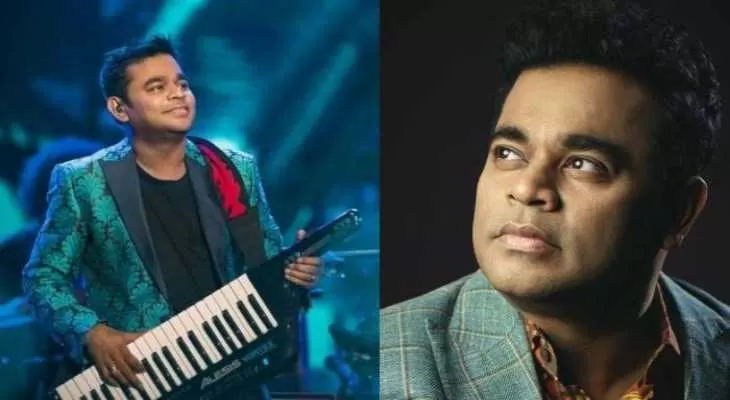

A.R. Rahman born on January 6, 1967 in Chennai (then Madras) India, is one of the most celebrated and versatile composers in global music. Rahman’s birth name was A. S. Dileep Kumar. He changed his name after converting to Islam following a personal tragedy, the death of his father when Rahman was just nine years old. The loss deeply affected him and sparked his interest in music as a form of emotional expression and healing.
Rahman initially trained in Indian classical music under the tutelage of famous musicians. He also delved into Western music and studied at the Trinity College of Music in London another person with his knowledge of Western classical music. Rahman’s early years as a composer were marked by his diverse musical influences and a passion for blending traditional Indian music with Western sounds.
Rahman's career took a turning point when he composed the sound track for the Tamil film Roja (1992), which quickly became a massive hit. The sound track’s fusion of classical Indian and modern music, combined with Rahman’s unique sound, garnered great
Attention. His work on Roja earned him the Film fare Award for Best Music Director and created him as a musical prodigy in the Indian film industry.
Following Roja, Rahman went on to create the sound tracks for several iconic films, including Bombay (1995) Dil Se (1998), and Taal (1999). Rahman's career took a turning point when he composed the sound track for the Tamil film Roja (1992), which quickly became a massive hit. The sound track’s fusion of classical Indian and modern music, combined with Rahman’s unique sound, garnered great
Attention. His work on Roja earned him the Film fare Award for Best Music Director and created him as a musical prodigy in the Indian film industry.
Following Roja, Rahman went on to create the sound tracks for several iconic films, including Bombay (1995) Dil Se (1998), and Taal (1999). His music became
In the late 1990s and early 2000s, Rahman solidified his position as one of Bollywood’s leading composers. His concerts with top directors like Mani Ratnam, Yash Chopra, and Sanjay Leela Bhansali produced some of Bollywood's most iconic music. Taal (1999), Lagaan (2001), and Dil Se (1998) were all critically acclaimed, with Rahman’s music playing a remarkable
role in their success. His ability to blend various genres such as Hindustani classical Carnatic, Sufi, and Western orchestral music made him a stand out figure in Indian cinema.
Rahman’s international recognition began to rise as well, and in 2009, his score for the British film Slumdog Millionaire directed by Danny Boyle earned him two Academy Awards including Best Original Score and Best Original Song for “Jai Ho.” Rahman became the first Indian composer to win an Oscar which not only elevated his career but also brought Indian music to the global stages. The success of Slumdog Millionaire led to Rahman’s collaboration on other international projects, including the musical Bombay Dreams (2002) on London’s West End and the score for the film 127 Hours (2010).
His international projects continued to grow with work on films like Lord of the Rings: The Return of the King and collaborations with Hollywood music producers. In addition, his compositions for global projects such as the FIFA World Cup 2010 anthem and the 2014 Asian Games opening ceremony underlined his global appeal.
As his career progressed Rahman expanded his focus beyond film and into other areas of music production. He united with international artists, produced albums, and even worked on stage productions. His spiritual and cultural roots remain central to his music, and he continues to explore the fusions of Eastern and Western sounds in innovative ways.
In addition to film work, Rahman ventured into the world of live performances . His A.R. Rahman Jai Ho Concert: The Journey Home World Tour in 2010 and subsequent performances in major cities worldwide brought his music to global audiences, showcasing his unique musical delicacy.
Rahman’s later works include the soundtracks for movies like Rockstar (2011), Kochadaiiyaan (2014), Delhi 6 (2009), and Puli (2015). These works feature a blend of modern music with traditional Indian elements that represent his signature styles.
As an artist, Rahman has expanded his repertoire with ventures into the tech industry launching a mobile application , KM Music Conservatory, which serves as an online platform for aspiring musicians.
A.R. Rahman’s influence on both Indian and global music is undeniable. He has created a unique sound that resonates with audiences across borders, blending classical Indian music, world rhythms, and modern Western sounds. His grant to the world of music has been widely identified making him a global legate for Indian music.
Rahman’s long and important career has been marked by a series of prestigious awards. In addition to his Academy Awards for Slumdog Millionaire, Rahman has received numerous Filmfare Awards, National Film Awards, and other accolades. He was also awarded the Padma Bhushan India’s third highest civilian award, in 2010 for his contributions to Indian cinema and music.
Among his many honors, Rahman has been named by Time magazine as one of the 100 most influential people in the world and received a Grammy Award for his work on Slumdog Millionaire.
The "Golden Age" of Indian cinema music occurred in the 1940s–60s when composers like S.D. Burman Laxmikant Pyarelal, and Shankar Jaikishan revolutionized film music in India. Rahman, though not a part of this era, was deeply impacted by these legends. His work in blending modern sounds with traditional impact has parallels with the techniques used during this era, albeit with an electronics and global twist.
The "Golden Age" of Indian cinema music occurred in the 1940s–60s when composers like S.D. Burman Laxmikant Pyarelal, and Shankar Jaikishan revolutionized film music in India. Rahman, though not a part of this era, was deeply impacted by these legends. His work in blending modern sounds with traditional impact has parallels with the techniques used during this era, albeit with an electronics and global twist.
This comprehensive overview of A.R. Rahman touches upon his early life, rise to fame, Bollywood success, international ventures, and later work. His achievements as a composer, producer, and musical innovator have forever changed the sound of Indian cinema and its presence in the global music scene.

Lata Mangeshkar Biography – Life, Career, Songs, Awards & Legacy
 Jul 30, 2025 03:07
Lata Mangeshkar Biography – Life, Career, Songs, Awards & Legacy
Jul 30, 2025 03:07
Lata Mangeshkar Biography – Life, Career, Songs, Awards & Legacy
Jul 30, 2025 03:07